Facebook marketing and remarketing are powerful strategies that can contribute substantially to the growth of your business. They not only reach a large and varied audience but let you shape advertising precisely around behaviour, building loyalty and increasing conversions. Using the platform’s distinctive tools, you can reach potential customers and bring back the ones who already showed interest in your products or services. Today, with competition in the market so intense, these strategies are essential to standing out and achieving lasting growth.
Waymakers – your dependable partner in Facebook marketing and remarketing. Our team specialises in building effective, tailored campaigns that reach a target audience and increase your visibility. With Waymakers you can be confident your advertising will reach the right people, and that remarketing will carry your message to those who have already shown interest in what you offer. We provide support across the whole process, from building a campaign to analysing the results, so you achieve maximum effectiveness and return on investment.
What is the difference between Facebook marketing and remarketing?
Facebook marketing covers building advertising campaigns and distributing content across social networks such as Facebook and Instagram. It reaches a target audience, raises brand awareness and encourages interaction. With detailed targeting by demographics, interests and behaviour, advertising can be shaped for the best possible results. Facebook also lets you analyse campaign effectiveness and refine your advertising.
Remarketing is a strategy for reaching people who have already interacted with your product but have not yet bought. Using cookies and other tracking tools, these people can be reached again through tailored advertising that reminds them of the products they viewed. That helps increase conversions and encourages people to return and complete a purchase.
Both tools — Facebook marketing and remarketing — can be combined to get the most out of advertising and improve sales. Facebook marketing reaches new people, while remarketing raises the chances of bringing back those already interested but not yet converted.
Why is Facebook one of the most effective platforms for business advertising?
Facebook is one of the most effective platforms for business advertising thanks to its enormous user base and its thorough audience targeting tools. The platform has more than 2 billion active users, which gives businesses access to a very large and varied audience. Facebook also lets you segment people precisely by age, gender, location, interests, behaviour and even the types of product they choose. That helps businesses reach the potential customers most likely to be interested in what they offer.
Another important advantage is Facebook’s ability to present advertising in a range of forms — photographs, video, carousel and collection ads — which let you present products vividly and engagingly. These advertisements can also be shown beyond Facebook, on platforms such as Instagram, widening reach and letting you use different media and forms of communication to reach different audiences.
Facebook also gives businesses powerful analytics tools for monitoring and judging campaign effectiveness. Through them you can see how advertising affects behaviour, from clicks through to conversions. That lets you optimise advertising in real time, improve ROI (return on investment) and keep refining your strategy for better results.
Facebook advertising also makes it possible to build lasting relationships through content marketing and interaction. People can not only see advertising but take part in competitions, share posts, comment or like — all of which builds brand awareness and loyalty. That creates a valuable connection between a business and its customers, one that often lasts long after the first encounter with an advertisement.
All of this together makes Facebook one of the most powerful and effective platforms for business advertising: it reaches a target audience, offers a range of advertising forms, measures results and builds lasting customer relationships.
How does remarketing bring back lost customers?
Remarketing is one of the most effective ways to bring back lost customers — people who showed interest in a product or service but did not take the action you wanted, such as buying. The strategy is built on behaviour, which makes it very well targeted and personal. When someone visits a site, looks at particular products or services but does not complete a purchase, remarketing lets you show them the same or related advertising again, reminding them of what they looked at.
The method works because it keeps a product or service present in the mind, which can bring someone back to complete a purchase. Remarketing reaches people at the moment they may already have forgotten a previous visit, and reminds them of what interested them. Remarketing campaigns also let people see personalised advertising matched to their earlier behaviour — advertisements for products they viewed or added to a basket.
Another important aspect is that remarketing lets you connect with people across several channels — Facebook, Instagram and even the Google Display Network. That reaches people across the various networks and sites they browse, so they consistently see advertising matched to their interests. Consistent reminding raises the likelihood that someone returns and converts — completing a purchase, for instance.
Remarketing also allows all sorts of optimisation, so that advertising is shown only to people genuinely interested. That reduces wasted spend and raises effectiveness. It ensures advertising is seen only by the people most likely to buy, which makes remarketing a very effective way to win back lost customers and increase conversions.
What are the most important steps in building an effective remarketing strategy?
Building an effective remarketing strategy takes a few essential steps, so that campaigns are shaped as precisely as possible and produce the best results. The first step is defining your goals clearly. That might be increasing conversions, winning back customers who abandoned a basket, or encouraging people who viewed products but did not buy. Setting goals gives direction to everything that follows and lets you measure success.
The second step is proper audience segmentation. Remarketing is only effective when advertising is shown to the right groups, so you need to build separate segments around behaviour. You might create one segment for people who visited the site but bought nothing and another for those who completed a purchase. It is also worth considering dynamic remarketing, which shows someone only the products they viewed or added to a basket — that raises effectiveness considerably.
The third step is personalising the advertising. One of the most important aspects of remarketing is that advertising has to relate to what someone did previously. That might be advertisements reminding them of products they viewed, or special offers for people who abandoned a basket. Tailored advertising is far more likely to catch interest and bring someone back to the site.
The fourth step is setting the right frequency. Advertising shown too often can tire people out and turn them against a product or service, so it matters to find the optimal frequency. That depends on behaviour and on the nature of the product or service, but the best effect is usually achieved when advertising is shown over the few days following the first interaction.
The fifth step is analysing and optimising campaigns. Remarketing campaigns need continuous monitoring and analysis so their effectiveness can be judged. It matters to watch metrics such as click-through rate (CTR), conversion rate, advertising spend and return, so campaigns can be adjusted for the best results. Regular optimisation lets you adjust content, frequency and audience for the highest effectiveness.
The last step is testing and experimentation. To find out what works best you have to try different advertising forms, headlines, visuals and audience segments. A/B testing is an excellent way to establish which elements work best and how campaigns can be improved. Experimenting with the various aspects of a campaign helps find the optimal combination — the one securing a high conversion rate and strong effectiveness.
5 examples of effective advertising
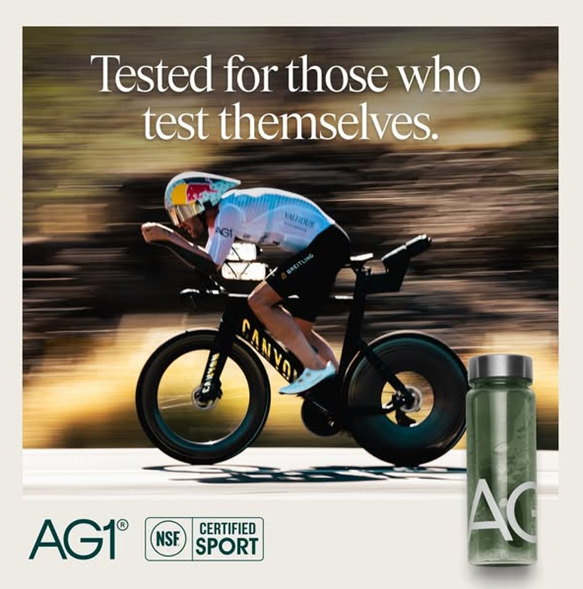
One excellent example of Facebook advertising can be seen in this AG1 advertisement. The line “Tested for those who test themselves” points precisely at active, sporty people, and helps build an emotional connection with the audience.
There is a clear visual focus, subtle but effective product integration and certifications that inspire confidence — which together make for a strong, clear advertisement aimed squarely at its target audience.
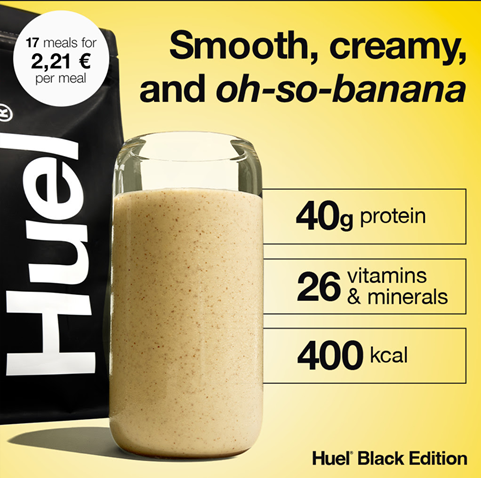
Another excellent example of Facebook advertising can be seen in this HUEL advertisement. It shows well what professional advertising design should look like. The typeface, colour combinations and composition meet the standards of high-quality advertising and help it stand out in the Facebook feed.

Here is another aesthetically appealing Facebook advertising visual. The colour combination makes you feel the cold of the mountains immediately. But this advertisement’s greatest strength is the happy customer’s testimonial. It works as social proof and shows exactly which problem the product solves.

We would also like to share a distinctive Nike example. The red Intersport logo in the background gives the Nike shoe a sense of exclusivity. The original price alongside the new, reduced one creates an impulse to buy quickly, while the promotion is still running.

And a last example. A playful take on a well-known phrase is one way to catch attention effectively. It is not every day you see the word “POOP” in pink above a food supplement. Simplicity with an element of surprise is an effective combination — no wonder this advertisement attracted so much attention.
How do you measure the success of Facebook marketing and remarketing campaigns?
Measuring the success of Facebook marketing and remarketing campaigns means defining and monitoring particular metrics (KPIs) that show how effectively campaigns reach their goals and what the return on investment (ROI) is. That lets you judge which elements work best and make the adjustments needed for better results.
The first important metric is click-through rate (CTR), which measures how many people clicked an advertisement. It matters a great deal, because it shows how interesting and appealing your advertising is to your audience. A high CTR often indicates the advertising matches people’s interests and is properly targeted. If CTR is low, you may need to review the content, the visuals or the target audience.
Conversion rate is another core metric, measuring how many people took the action you wanted after clicking — buying a product, say, or registering for a service. Conversion is the point of remarketing, so this metric shows whether your campaign effectively encourages people to buy or take another important action. Watching conversions lets you judge advertising quality and whether campaign goals are being met.
Return on investment (ROI) shows how much revenue is generated for every euro invested in advertising. It is one of the most important metrics, because it lets you judge the efficiency of your spend. A positive ROI means campaigns return more than they cost; a negative one means the strategy needs reviewing and the spend optimising.
Reach and engagement are important metrics where the goal is brand awareness or drawing people into content. Reach measures how many unique people saw an advertisement; engagement measures how many interacted with it (clicks, comments, likes and shares). These help you understand whether the advertising was noticed and whether it caught people’s interest.
Beyond these, cost per click (CPC) and cost per acquisition (CPA) are also worth watching. CPC shows what each click on an advertisement costs, CPA what a single conversion costs — a sale or a registration. These help establish effectiveness and let you optimise campaigns to reduce spend.
Finally, the success of remarketing campaigns can be measured by how many people returned to the site and took the actions you wanted, such as buying. Facebook and Instagram provide dedicated tools for tracking how remarketing advertising affects returns. That can cover people who viewed products but did not buy, or who abandoned a basket.
It matters that measuring success is a continuous process — the metrics should be monitored and analysed constantly, so campaigns can be adjusted quickly to improve results and optimise the investment. Regular testing and A/B analysis also help establish which elements work best and where the strategy can be improved.
To sum up, Facebook marketing and remarketing are essential tools helping businesses grow and expand in the digital space. They reach a target audience, attract new customers and bring back those who already showed interest. Using advanced segmentation and analytics tools, businesses can build personalised, effective advertising that improves conversions and maximises return on investment. Built into a marketing strategy, these tools not only raise brand awareness but secure lasting customer loyalty and successful growth.
If you want to apply Facebook marketing and remarketing effectively to grow your business, Waymakers is here to help. Our team has years of experience building and managing social media campaigns, so we can make sure your advertising is precisely matched to your audience, increasing conversions and maximising return on investment. Rely on our professionalism and our judgement to get the greatest effectiveness from your advertising and reach your business goals faster. Let Waymakers be your partner on a successful advertising journey.

